
Flow of money into non-resident Indian (NRI) deposits moderated sharply to $3.23 billion in April 2021-March 2022 from $7.36 billion in the same period of the previous year. Outstanding deposits have also gone down to $139.02 billion at the end of March 2022. This compares to $141.89 billion a year ago, according to Reserve Bank of India (RBI) data.
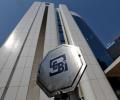
Markets regulator Securities and Exchange Board of India (Sebi) is examining allegations of front-running and other irregularities against a host of domestic fund managers across the asset management industry, said people in the know. Developments at Axis Mutual Fund have prompted the regulator to speed up probe to ensure that there is no drop in confidence in the Rs 39-trillion mutual fund (MF) industry. "We have received complaints against a few fund managers and are looking into possible violations, including those related to code of conduct," said a regulatory source, refusing to divulge names of fund houses as things are at a preliminary stage.

Global rating agency Moody's on Monday said the high commodity prices and supply chain disruptions due to further escalation in the Russia-Ukraine crisis could expose about 42 per cent of rated Indian companies to significant risks. They are mainly in the oil and gas and automotive sectors. The impact may be seen under two scenarios: first, revised base line and second being downside economic scenarios incorporating a global recession and a more severe liquidity squeeze, it said. The military conflict between Russia and Ukraine is impacting companies in Asia Pacific, adding to existing challenges from supply chain disruption and the coronavirus pandemic.

The Indian lenders are worried over the fast depleting asset base of the Future group companies which would make their recovery of dues difficult. The asset base of Future group has eroded in the last two years due to lockdown and takeover of 947 stores by rival Reliance Retail after Future group's lease on the properties expired. Bankers said they have approached bankruptcy court so as to avoid any duplication of legal action and reduce time at the legal forums.

Tax consultants and chartered accountants have started receiving a flurry of calls from their clients - both corporate and individuals - seeking clarity over changes in the reassessment regime made during the recently concluded Budget Session of Parliament. Tax experts apprehend the amendments may lead to the income-tax (I-T) department sending out more notices. The new provisions, effective from April 1, have extended the scope for tax sleuths to reopen the past assessments.

The new amendment, which came into force on April 21, has been introduced to detect discrepancies between the expenses and incomes of people who do not have to file tax returns.

The finance ministry (FinMin) has asked Infosys to work on ways to extract and access taxpayers' real-time data faster and accurately as it is crucial for taking decisions on policy changes. While reviewing progress of the income tax portal 2.0, which had faced glitches, the officials also told the Infosys team to increase the scope of pre-filled data in the ITR forms. Senior officials in the ministry held a review meeting last month with the Infosys team and officials of the Central Processing Centre (CPC).

Indians having undisclosed income in the United States (US) may face proceedings under Black Money (Undisclosed Foreign Income and Assets) and Imposition of Tax Act, 2015, this financial year. Also, those named in global leaks may be searched, show-caused, and prosecuted, according to the FY23 internal action plan of the Central Board of Direct Taxes (CBDT). The CBDT has rolled out an aggressive target and timeline to investigate tax evasion matters, especially those involving undisclosed foreign assets.

Companies planning merger and acquisition (M&A) will have to disclose the extent of "complementary linkages" among them and their impact on the market. This comes under the revised reporting requirements of the Competition Commission of India (CCI). The changes will take effect on May 1. Entities may also have to provide market-facing data of the past five years with respect to their market size, the market share of the parties, and also that of the competitors, along with customers and suppliers.

Transiting from "survival mode", which took most of the management time in FY21, the bank has been able to take a long-term view in terms of growth and preparing technology in the past 12 months.

The tax authorities may tell banks and crypto exchanges to report transactions of virtual digital assets (VDAs) as the government begins taxing gains from cryptocurrencies and non-fungible tokens from April 1. So far, the tax department has relied on voluntary disclosures on transactions of VDAs. Once implemented, the sale and purchase of digital assets will reflect in the Annual Information Statement (AIS). The AIS contains details of at least 46 of the financial transactions done by a taxpayer in a financial year.

The Centre has recovered around Rs 95.86 crore from at least 11 crypto exchanges for evading goods and services tax (GST), according to data released by Parliament on Monday. The amount includes interest and penalty. The GST investigation department has detected a total tax evasion of Rs 81.54 crore by crypto exchanges that include WazirX, Coin DCX, CoinSwitch Kuber, Buy Ucoin, UnoCoin and Flitpay, among other exchanges. In a written reply to Lok Sabha, minister of state (MoS) for finance Pankaj Chaudhary said 11 cases of GST evasion by cryptocurrency exchanges have been detected by central GST formations.

Is the worst over for Indian banks? The past two years saw them ride on treasury trades as deposits soared and credit growth dipped sharply. Gross and net non-performing assets (NPAs) moved south, and the provision coverage ratio (PCR), capital buffers, and profitability indicators are back at pre-pandemic levels. So, what's the plot ahead?

The country's largest lender State Bank of India (SBI) will revamp its banking application (app) YONO and position it as a complete digital bank (DB) under a new rubric 'Only YONO' for enhancing customer experience and ease of use. The bank plans to bring in a consultant to help draw up the project plan, keeping in mind business goals for the next five years. With 54 million monthly active users (MAUs), SBI YONO has seen growth of over 35 per cent in MAUs in 2021.

With the international markets facing uncertainty after Russia invaded Ukraine and Western nations retaliated with sanctions, Indian companies are putting their international fundraising plans on hold as they wait for the markets to recover. Bankers said apart from the geopolitical crisis, international rates are hardening in anticipation of interest rate hikes by the US Federal Reserve to control rising prices in the US. The Ukraine situation has implications for the market. In such a situation, international investors try to shift to safe haven assets by exiting from emerging markets.

Zombies a.k.a perpetually loss-making firms in India seem to have dampened the effectiveness of monetary policy at the margin as they use borrowed resources more for their survival than for undertaking new investment, according to a RBI study. The monetary policy does not hinder the creative destruction process by misallocating credit flows to zombies during periods of economic slowdown, showed a study by officers of Reserve Bank of India. It has been published in RBI's bulletin for February 2022. In India, zombie firms are estimated to account for about 10 per cent of total debt of the non-financial corporate sector.

Commercial banks in the country continued with their improving asset quality trend in the October-December 2021 quarter with slippages remaining under control coupled with healthy recoveries and upgradation of asset classification. The 28-listed banks reported improvement in bottom line with net profits rising 64.1 per cent year-on-year (YoY) and 21.5 per cent sequentially. This is mostly on account of a fall in provisions and contingencies.
This is following revival of demand from the corporate sector and small and medium enterprises (SMEs), even as a nascent economic recovery is taking shape. Credit growth of scheduled commercial banks had accelerated to 9.2 per cent year-on-year (YoY) by the end of December 2021 after breaching the 7 per cent-mark in November, for the first time since April 2020.

Banks and companies in India are taking a cautious approach towards Sri Lanka, which, reeling from a financial crisis, has sought a $1-billion loan from the country to import essential commodities. A senior State Bank of India (SBI) executive said the bank was committed (to Sri Lanka) for the long term. "As far as exposures (are concerned), the bank will be cautious on its dollar exposure to Sri Lankan entities till the situation improves," he said.

The Reserve Bank of India (RBI) will stay away from changing key rates - including the reverse repo rate - this fiscal in the backdrop of Omicron. However, it will continue to shape the rate movements through liquidity market operations. Soumya Kanti Ghosh, group chief economic advisor, State Bank of India, said whether Omicron surge or not, there is not going to be any hike this year. However, the central bank may continue to shape rates through market operations.
 © 2025 Rediff.com - Investor Information - Advertise with us - Disclaimer - Privacy Policy - Sitemap - Feedback - About us - Terms of use - Grievances